
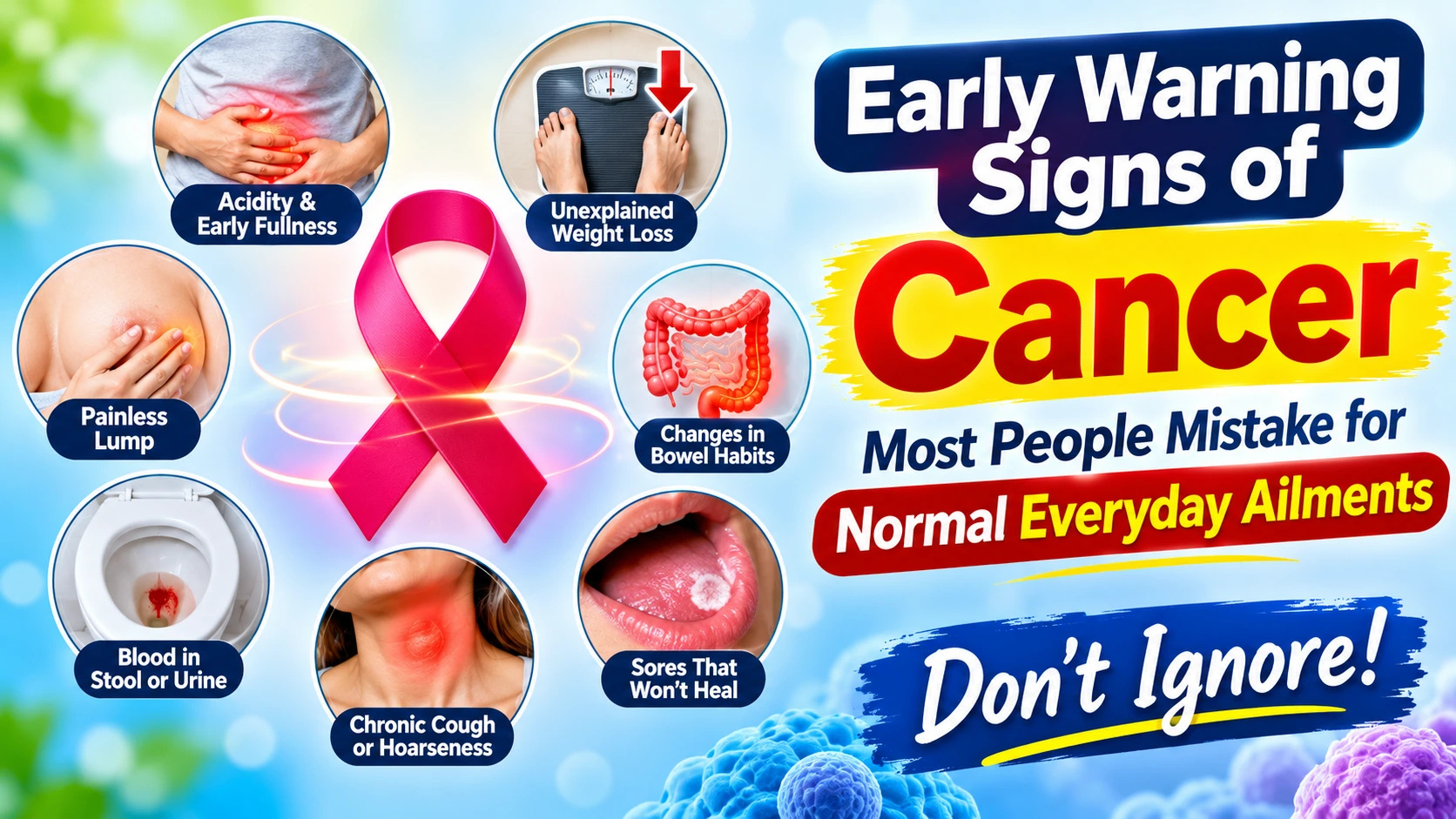
Cancer rarely begins with dramatic pain or severe illness. In fact, in its earliest, most curable stages, cancer is remarkably quiet. Most patients diagnosed with gastrointestinal, breast, or gynecological malignancies initially visited their doctors complaining of everyday ailments—a bout of acidity that wouldn't go away, feeling full too quickly, an itchy painless lump, or feeling unusually tired.
Because these subtle signals mimic benign conditions like indigestion, hemorrhoids, or routine stress, people often self-medicate for months. According to Dr. Malyadri Paladugu, Senior Consultant Surgical Oncologist at Karthikeya Speciality Clinics in Bachupally, Hyderabad, early detection increases 5-year survival rates past 90% for most common cancers. Recognizing these early signs can mean the difference between a minor cure and an advanced illness.
Top 8 Early Warning Signs of Cancer People Commonly Dismiss
1. Persistent Acidity, Indigestion, or "Early Fullness" (Gastric Cancer)
Almost everyone experiences occasional heartburn after spicy food. However, if you have been taking antacids like Pantoprazole or Omeprazole for more than 3 consecutive weeks with symptoms constantly returning, it requires clinical evaluation.
A classic early indicator of stomach cancer is early satiety—feeling uncomfortably stuffed after eating only a small fraction of your normal meal. When a tumor develops on the stomach wall, the stomach loses its natural elasticity and cannot expand to hold food.
2. Unexplained, Sudden Weight Loss
Losing 4 to 5 kilograms or more over 1 to 3 months without dieting, exercise, or lifestyle changes is a major biological red flag. Rapidly dividing cancer cells consume immense amounts of the body's glucose and produce inflammatory cytokines that break down muscle and fat reserves (cancer cachexia).
3. Any Painless Lump in the Breast, Neck, or Groin
One of the most dangerous myths in oncology is: "If it doesn't hurt, it must be harmless." In reality, benign cysts and infections often hurt, whereas early-stage malignant tumors almost never cause pain. Any firm, non-tender lump in the breast, armpit, thyroid, or groin that persists for more than two weeks should be evaluated with an ultrasound or digital mammogram.
4. Altered Bowel Habits and Pencil-Thin Stools (Colorectal Cancer)
Colorectal cancer is rising sharply in adults aged 30 to 50 due to sedentary lifestyles and low-fiber diets. Watch for these persistent changes:
- Alternating bouts of constipation and unexplained loose stools lasting over 3 weeks.
- Stools that have suddenly become unusually thin (pencil-caliber), indicating a mass narrowing the colon lumen.
- A sensation of incomplete evacuation (feeling like you still need to pass stool immediately after finishing).
- Dark, black tarry stools (melena) caused by bleeding high in the digestive tract.
5. Blood in Stool, Urine, or Between Menstrual Cycles
Never assume blood in the stool is "just piles" or hemorrhoids without a digital rectal exam or colonoscopy. Bright red blood mixed in the stool is a primary warning sign of rectal cancer. Similarly, painless blood in the urine (hematuria) is the cardinal early sign of bladder or kidney cancer, and post-menopausal vaginal bleeding warrants immediate investigation for endometrial or cervical cancer.
6. Chronic Cough, Hoarseness of Voice, or Trouble Swallowing
A stubborn dry cough or voice hoarseness that lasts longer than 3 weeks—especially in smokers or individuals exposed to secondhand smoke and industrial pollution—is not just a lingering cold. Trouble swallowing solid foods (dysphagia) or feeling food get stuck in the chest is a key warning sign of esophageal or throat cancer.
7. Unexplained, Deep Fatigue That Doesn't Improve with Sleep
Unlike normal workday tiredness that resolves after a good night's rest, cancer-related fatigue is persistent, overwhelming, and worsening. Microscopic, unseen blood loss from early stomach, colon, or kidney tumors slowly leads to severe iron-deficiency anemia (hemoglobin dropping below 10 g/dL), leaving tissues starved of oxygen.
8. Sores That Won't Heal or Persistent White Patches in the Mouth
In Hyderabad and across Telangana, oral cancers are widespread due to tobacco, betel nut, and gutkha use. Any oral ulcer, burning sensation when eating chillies, or non-scrapeable white/red patch (leukoplakia or erythroplakia) on the tongue, gums, or inner cheek that does not heal within 14 days must be examined by a surgical oncologist.
Normal Health Issue vs. Potential Cancer: Quick Comparison
| Symptom | Likely Benign Condition | Suspicious for Cancer (See Doctor) |
|---|---|---|
| Stomach Burning / Acidity | Relieved by antacids; occurs only after heavy/spicy food | Constant, progressive burning; accompanied by nausea or weight loss |
| Body Lump | Tender, soft, changes size with menstrual cycle (fibroadenoma/cyst) | Hard, fixed, painless, steadily growing over weeks |
| Rectal Bleeding | Sharp pain during hard stools, blood on tissue paper (fissure/piles) | Painless blood mixed within the stool, darker clots, unexplained diarrhea |
| Cough & Throat Irritation | Clears within 7–10 days with steam or antibiotics | Lasts > 3 weeks, rust-colored sputum, progressive hoarseness |
| Tiredness & Weakness | Improves after weekend rest or hydration | Exhaustion on minimal exertion, pale skin, unexplained anemia |
What Should You Do If You Have Any of These Symptoms?
Having one or more of these symptoms does not mean you have cancer. In most instances, timely diagnostic workups reveal benign, easily treatable issues like gastritis, H. pylori bacterial infection, internal hemorrhoids, or benign adenomas.
However, getting them checked removes the guesswork. A standard diagnostic assessment may include:
- High-Resolution Ultrasound or Mammography: For breast, thyroid, and pelvic lumps.
- Upper GI Endoscopy or Colonoscopy: Allows direct visualization and painless micro-pinch biopsy of stomach or bowel lining.
- Low-Dose CT (LDCT): Highly recommended for long-term smokers over 40 for early lung screening.
- Routine Blood & Stool Tests: Complete Blood Count (CBC) and Fecal Occult Blood Test (FOBT) to detect microscopic bleeding.
If surgery or biopsy is ever needed, modern minimally invasive options like Oncoplasty Breast Surgery and Precision Robotic Cancer Surgery offer complete tumor removal with tiny incisions, minimal downtime, and excellent cosmetic preservation.
Frequently Asked Questions (Google Search FAQs)
Can acidity or GERD turn into stomach cancer?
Routine acidity does not directly cause cancer. However, long-term, untreated acid reflux can cause chronic inflammation of the lower esophagus (Barrett's Esophagus), which significantly raises the risk of esophageal cancer. Similarly, chronic stomach inflammation caused by untreated H. pylori bacteria is a proven precursor to gastric cancer.
At what age should people begin cancer screening?
General screening guidelines recommend women start clinical breast exams and mammograms between ages 40 and 45. Colorectal screening (colonoscopy) should begin at age 45 for both men and women (earlier if there is a family history of colon polyps or cancer). Cervical cancer screening (Pap smear + HPV DNA) should begin at age 25.
Does a biopsy cause cancer cells to spread?
No. Modern biopsies use coaxial protective needles that prevent any tumor cell displacement. A biopsy is the only definitive way to confirm cancer type, grade, and receptor status so oncologists can prescribe targeted treatment.
Consult a Leading Surgical Oncologist in Bachupally, Hyderabad
Don't ignore persistent body changes or live with lingering health anxiety. Getting a timely clinical opinion from an experienced cancer surgeon provides complete clarity and peace of mind.
Dr. Malyadri Paladugu (MS, MCh - Surgical Oncology) specializes in early cancer screening, GI malignancies, breast conservation, and advanced laparoscopic cancer surgery at Karthikeya Speciality Clinics, Bachupally, Hyderabad.