
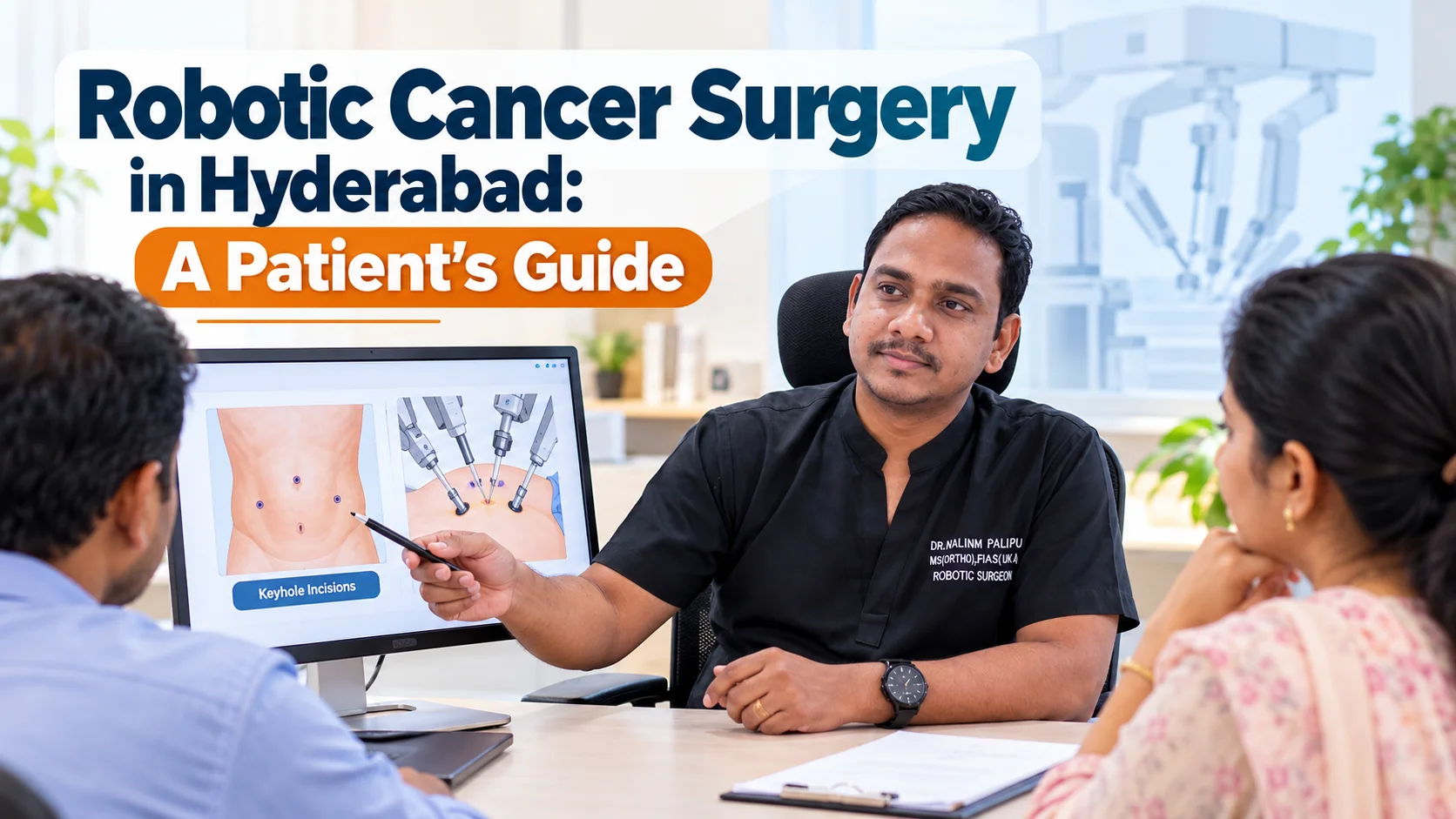
A cancer diagnosis changes the next few weeks of your life very quickly. There are scans to book, reports to understand, and a lot of unfamiliar words. Then the surgeon mentions that the operation might be done “robotically” or “through keyhole incisions,” and a new set of questions begins. Is a robot safer? Will it remove all the cancer? How soon can I go home? Is it right for me?
This guide is written for newly diagnosed patients and the family members supporting them. It explains what robotic cancer surgery in Hyderabad involves, how it compares with laparoscopic and open surgery, and what the research shows about its benefits and limitations. It also covers who may or may not be suitable, what recovery usually looks like, and the questions worth asking before you agree to an operation. The aim is not to persuade you towards any one technique. It’s to help you have a better-informed conversation with your surgical team.
What Is Robotic Cancer Surgery?
Robotic cancer surgery is a form of minimally invasive, or “keyhole,” surgery. Instead of one large incision, the surgeon makes several small cuts, usually under a centimetre or two, and inserts a camera and slim instruments through them.
In robotic surgery, those instruments are attached to robotic arms. The surgeon sits at a console a few feet away, viewing a magnified, three-dimensional image of the inside of the body, and controls every movement of the instruments. The robot does not operate on its own or make decisions. It translates the surgeon’s hand movements into precise movements of instruments that can bend and rotate inside the body. A widely used example is the da Vinci robotic surgical system.
The cancer operation itself, such as removing part of the bowel, the uterus or a kidney along with nearby lymph nodes, follows the same principles whichever technique is used. What changes is how the surgeon reaches and works on the area.
Open, Laparoscopic and Robotic Surgery: How They Compare
| Factor | Open surgery | Laparoscopic surgery | Robotic-assisted surgery |
|---|---|---|---|
| Incision | One larger incision | Several small incisions | Several small incisions |
| How the surgeon sees | Directly, by eye | On a screen, usually 2D or 3D, via a camera | Magnified 3D view at a console |
| Instrument movement | Full hand access | Straight, rigid instruments | Wristed instruments that bend and rotate |
| Typical strengths | Best option for some large, advanced or complex tumours; full tactile feel | Smaller wounds; well established for many abdominal cancers | Can help in tight spaces such as the deep pelvis; steady, precise movement |
| Limitations | Larger wound, often more pain and a longer recovery | Harder in narrow spaces; demands high surgeon skill | Higher cost; often longer operating time; no direct sense of touch; available at fewer hospitals |
Both laparoscopic and robotic approaches fall under minimally invasive oncology surgery. A surgeon may also start with a keyhole approach and switch to an open operation during surgery if it’s safer. This is called conversion, and it reflects good judgement, not failure.
What the Evidence Actually Says
Robotic surgery is often described in very positive terms, and patients deserve a balanced picture.
Potential Benefits
Compared with open surgery, keyhole approaches, including robotic ones, may reduce pain, blood loss, scarring, infection risk and recovery time. The U.S. Food and Drug Administration lists these as possible advantages of robotically assisted surgery. Smaller wounds can also mean a patient is fit for further treatment, such as chemotherapy, a little sooner. How much any individual benefits depends on the cancer, the operation and their overall health.
Important Limitations
- Robotic is not automatically better than laparoscopic. In the large ROLARR randomised trial of rectal cancer surgery, robotic-assisted surgery did not significantly reduce the rate of conversion to open surgery compared with conventional laparoscopy. Rates of cancer cells at the cut edge were also similar.
- For some cancers, open surgery may be the safer choice. In the LACC trial published in the New England Journal of Medicine, women with early-stage cervical cancer who had minimally invasive radical hysterectomy, laparoscopic or robotic, had lower disease-free and overall survival than those who had open surgery. Open surgery has since become the standard recommended approach for radical hysterectomy in many guidelines.
- Regulators urge careful discussion. The FDA has cautioned that long-term survival benefits of robotic devices in cancer surgery have not been established compared with traditional surgery. It advises patients to ask about their surgeon’s training, experience and outcomes.
The practical takeaway: the right technique depends on your specific cancer, its stage, and your surgeon’s experience with that operation. The skill and judgement of the surgical team usually matter more than the machine.
Which Cancers May Be Treated with Keyhole or Robotic Surgery?
Depending on stage and location, minimally invasive approaches are used for a range of cancers, including:
- Colorectal cancers: colon and rectal resections, such as hemicolectomy and anterior resection
- Stomach cancer: partial or total gastrectomy in selected patients. Learn more about stomach and colorectal cancer surgery.
- Gynaecological cancers: such as endometrial (uterine) cancer. Read about gynaecological cancer surgery.
- Urological cancers: kidney (radical or partial nephrectomy), prostate, and adrenal tumours. See kidney, prostate and adrenal cancer surgery.
- Thoracic cancers: certain lung resections and parts of oesophageal cancer surgery
- Some liver and pancreatic tumours in carefully selected cases
Being on this list doesn’t mean every patient with that cancer is a candidate. Suitability is decided case by case.
Who May Not Be a Good Candidate?
Your surgeon may recommend open surgery, or a different treatment first, if:
- The tumour is very large, has grown into nearby organs, or needs extensive reconstruction
- You’ve had several previous abdominal operations, with scar tissue (adhesions) that makes keyhole access difficult
- Heart or lung conditions make it risky to inflate the abdomen with gas or to tilt the body steeply, as some keyhole operations require
- The evidence for your particular cancer favours open surgery, as with radical hysterectomy for early cervical cancer
- Chemotherapy or radiotherapy before surgery would give a better result
A recommendation for open surgery is not a lesser option. For some patients it’s the most effective and safest one.
The Treatment Journey, Step by Step
Every hospital and every cancer is different, but most surgical cancer care follows a similar path:
- Diagnosis: Usually confirmed with a biopsy, a small tissue sample examined under a microscope.
- Staging: Scans such as CT, MRI or PET-CT show the tumour’s size and whether it has spread. This determines whether surgery is appropriate and which type.
- Team review: Many hospitals discuss cases at a tumour board, where surgeons, medical and radiation oncologists, radiologists and pathologists agree on a plan together.
- Pre-operative assessment: Blood tests, heart and lung checks, and a review of your medicines. Staying active, eating well, and stopping smoking before surgery can help recovery.
- Surgery: The tumour is removed with a margin of healthy tissue, often along with nearby lymph nodes.
- Recovery in hospital: Many centres follow Enhanced Recovery After Surgery (ERAS) protocols. These encourage early walking, early eating and good pain control to speed recovery.
- Pathology report: The removed tissue is examined to confirm the stage and check that the edges are clear. This guides decisions about further treatment.
- Further treatment and follow-up: Some patients need chemotherapy, radiotherapy or other therapies. All patients need regular follow-up.
What Recovery Usually Looks Like
Recovery after keyhole surgery is often quicker than after open surgery, but it is still major surgery. Many patients are encouraged to sit up and walk within a day and to start fluids early. Hospital stay varies widely with the operation, from a few days for some procedures to longer for complex bowel, stomach or oesophageal surgery.
At home, expect tiredness for several weeks. Follow your team’s advice on lifting, driving and wound care. Contact the hospital promptly if you develop fever, increasing pain, redness or discharge from a wound, vomiting, breathlessness, or difficulty passing urine or stools.
Cost and Insurance Considerations
Costs for cancer surgery in Hyderabad vary considerably, so ask for a written estimate from the hospital. The main factors are:
- The type and complexity of the operation
- Whether the approach is open, laparoscopic or robotic; robotic procedures generally involve additional equipment costs
- Length of hospital stay and any intensive care
- Pre-operative tests and scans, and the pathology examination
- Room category chosen
- Further treatment after surgery
Health insurance policies differ in how they cover robotic and other advanced procedures, and some apply sub-limits. Check your policy wording and speak to the hospital’s insurance desk before admission, especially for cashless approval.
How to Find the Best Cancer Surgeon in Hyderabad for Your Situation
“Best” depends on your cancer and your needs. These criteria help you judge:
- Specialist training: A surgical oncologist typically holds a super-speciality qualification such as MCh or DNB in Surgical Oncology. Additional fellowships in laparoscopic or robotic surgery indicate focused training.
- Registration: Doctors in India must be registered with a State Medical Council or the National Medical Commission. You’re entitled to ask for the registration number.
- Relevant experience: Ask how often the surgeon performs your specific operation, not just robotic surgery in general.
- Team-based planning: Look for a surgeon who works with medical and radiation oncologists rather than deciding alone.
- Hospital support: Intensive care, round-the-clock surgical cover, and good pathology and imaging services matter as much as the operating theatre.
- Honest communication: A good robotic surgical oncologist will explain when open or laparoscopic surgery is the better choice, not just recommend the newest technology.
Questions to Ask Your Surgeon
- What stage is my cancer, and what is the goal of this surgery?
- Why do you recommend robotic, laparoscopic or open surgery for me?
- How many of these specific operations have you performed?
- What are the main risks, and what is the chance of converting to open surgery?
- Will I need chemotherapy or radiotherapy before or after surgery?
- How long will I be in hospital, and when can I return to normal activities?
- What will the total cost be, and what does my insurance cover?
Seeking a second opinion is a normal and sensible step before major cancer surgery. Most experienced surgeons welcome it.
Common Misconceptions
- “The robot does the surgery.” The surgeon controls every movement. The technology is a tool, and the outcome depends on the person using it.
- “Robotic is always the most advanced, so it must be best.” As the trials above show, the best approach varies by cancer type and patient.
- “Keyhole surgery removes less cancer.” The goal of the cancer operation is the same; the approach is chosen so the tumour and relevant lymph nodes can be removed safely and completely. If that isn’t possible through keyhole access, open surgery is used.
- “Small scars mean a minor operation.” Internally, the operation can be as extensive as open surgery. Take recovery advice seriously.
- “Asking for a second opinion will offend my doctor.” It’s a routine part of cancer care and helps you feel confident in your decision.
A Note for Family Caregivers
Caregivers often carry the practical load: appointments, paperwork, insurance and the questions the patient is too tired to ask. A few things help:
- Keep one folder, physical or digital, with every report, scan, biopsy result and prescription.
- Write questions down before each appointment and note the answers.
- Ask the team what support will be needed at home after discharge.
- Look after yourself too. Supporting someone through cancer treatment is demanding, and accepting help from others is not a weakness.
A Hypothetical Example
The following is an illustrative scenario, not a real patient’s story.
A 58-year-old man is diagnosed with colon cancer after a colonoscopy. His family has read about robotic surgery and asks for it straight away. The surgical oncologist first arranges staging scans and discusses the case with the wider oncology team. The cancer is localised, and the team agrees that keyhole surgery is suitable. The surgeon explains why a laparoscopic or robotic approach would be reasonable, the small possibility of converting to open surgery, and what the pathology report will decide about chemotherapy afterwards.
The family leaves with a clear plan and realistic expectations. Thorough staging, team review, and an honest discussion of options came before the choice of technology. Each patient’s actual course depends on their own cancer and health.
Surgical Oncology Consultations at Karthikeya Speciality Clinics
Karthikeya Speciality Clinics & Pharmacy in Bachupally, near Miyapur, Hyderabad, offers outpatient consultations with Dr. Malyadri Paladugu, Senior Consultant Surgical Oncologist at Yashoda Hospital, Hitech City. According to the clinic, his qualifications include MCh (Surgical Oncology), FIAGES, FALS (Oncology) and MRCS (Edinburgh), and he has more than 10 years of surgical experience.
The clinic states that robotic and laparoscopic cancer operations are performed at Yashoda Hospital, Hitech City, using the da Vinci robotic surgical system and 4K laparoscopy. The listed scope covers colorectal, stomach, gynaecological, urological and thoracic cancers. You can read more on the laparoscopic and robotic cancer surgery page or view Dr. Malyadri Paladugu’s profile.
If you’d like to discuss your reports or get a surgical opinion, you can request a consultation through the clinic’s contact form.
Final Thoughts
Robotic surgery is a valuable option in modern cancer care, but it’s one tool among several. When you look into robotic cancer surgery in Hyderabad, focus on three things: an accurate diagnosis and stage, a team-based treatment plan, and a surgeon with real experience in your specific operation who will tell you honestly which approach suits you best.
Bring your reports, your questions and a family member to your consultation. If you’re ready to talk through your options, book a consultation with the surgical oncology team at Karthikeya Speciality Clinics.
Frequently Asked Questions
Is robotic cancer surgery safer than open surgery?
For many operations, keyhole approaches, including robotic ones, are associated with less blood loss, less pain and shorter hospital stays than open surgery. However, long-term cancer outcomes are not proven to be better in every cancer type. For some, such as early cervical cancer needing radical hysterectomy, research favours open surgery. Your surgeon should explain the evidence for your specific situation.
What is the difference between a laparoscopic cancer surgeon and a robotic surgeon?
Both perform keyhole surgery. A laparoscopic cancer surgeon operates directly with long, straight instruments while watching a screen. A robotic surgeon controls wristed instruments from a console with a magnified 3D view. Many surgical oncologists are trained in both and choose based on the operation and the patient.
How long does recovery take after minimally invasive cancer surgery?
It depends on the operation and your general health. Many patients walk within a day and go home within days rather than weeks, but complex surgeries need longer stays. Full recovery of energy often takes several weeks. Your team will give you specific guidance on activity, diet and follow-up.
Does health insurance cover robotic cancer surgery in India?
Many health insurance policies cover robotic procedures, but terms, sub-limits and approval processes vary between insurers and plans. Read your policy document, contact your insurer, and ask the hospital’s insurance desk to confirm coverage and cashless eligibility before admission.
Should I get a second opinion before cancer surgery?
A second opinion is a reasonable and common step, especially for major operations or when you’re unsure about the recommended approach. It can confirm the plan or offer alternatives. Bring all your reports, scans and biopsy slides or results so the second surgeon can give an informed view.
Will I need chemotherapy after surgery?
Not always. The decision depends mainly on the final pathology report, which shows the cancer’s exact stage, whether lymph nodes are involved, and whether the edges of the removed tissue are clear. Your oncology team will discuss whether chemotherapy, radiotherapy or other treatment would lower the risk of the cancer returning.
This article provides general information and is not a substitute for medical advice. Treatment decisions should be made with a qualified oncologist who has reviewed your reports and examined you.